
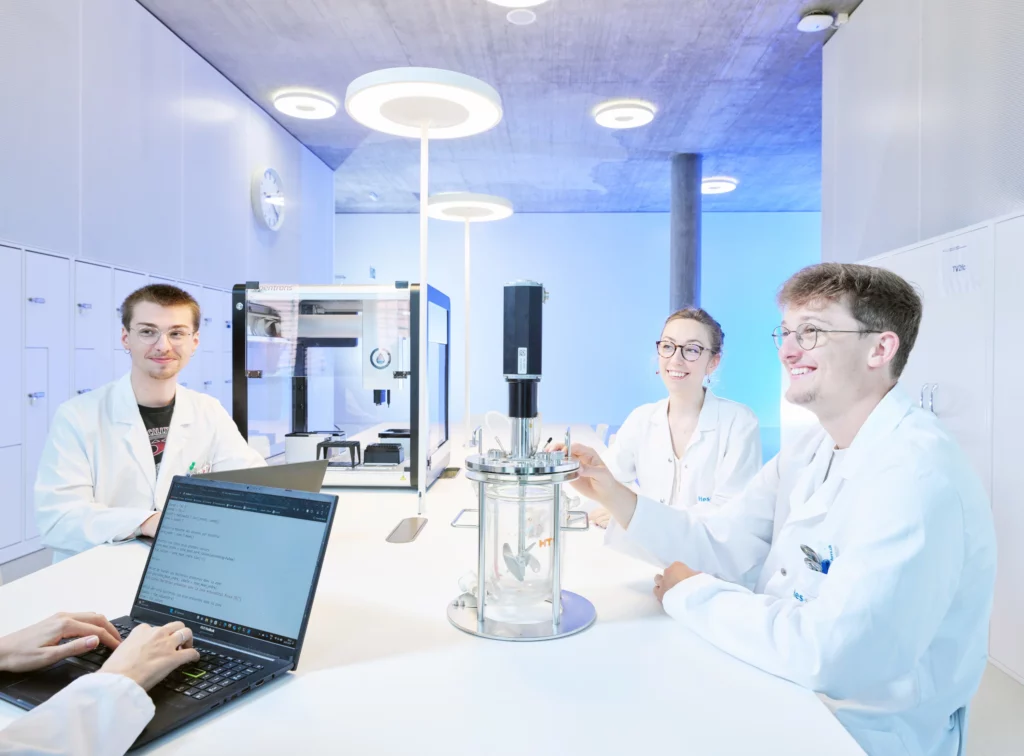
At HES-SO Valais-Wallis, the Digital Life Sciences (DLS) major at the School of Engineering trains future engineers to apply artificial intelligence to concrete life-science challenges. A recent student project, NutriGuard AI, illustrates this practice-oriented approach by combining computer vision, sensor data and language models to support food quality assessment.
Artificial intelligence is increasingly embedded in life-sciences activities, from quality control and data analysis to process optimisation and decision support. To respond to this evolution, the Digital Life Sciences (DLS) major at the School of Engineering of HES-SO Valais-Wallis places applied AI at the core of its curriculum, equipping Bachelor’s students in Life Sciences Engineering with skills directly transferable to industrial and research environments.
Learning AI through real-world applications
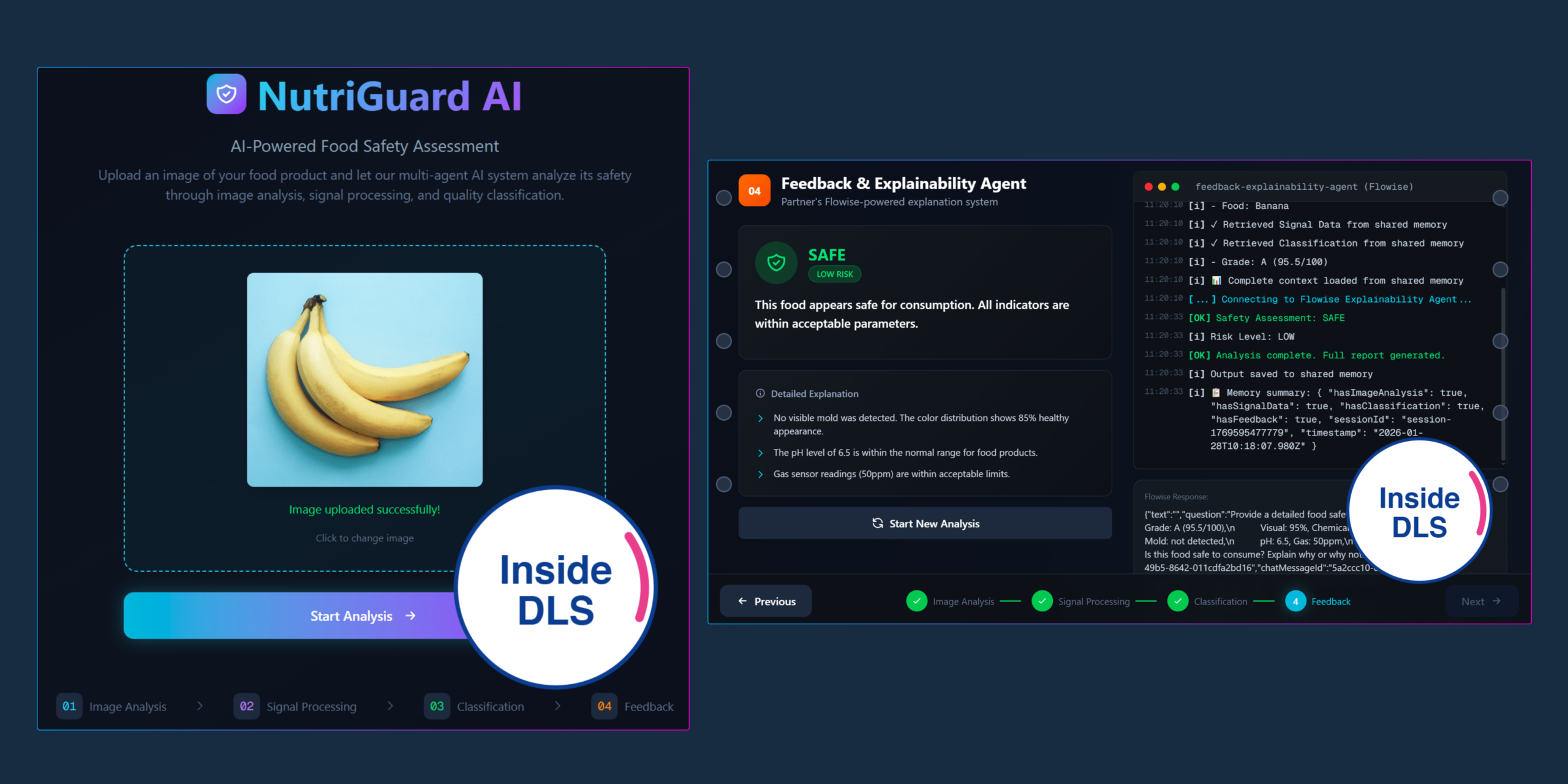
As part of the Starting with AI course in the Digital Life Sciences (DLS) major at the School of Engineering, Bachelor’s students in Life Sciences Engineering developed NutriGuard AI, an application designed to support food quality assessment. Rather than focusing on isolated algorithms, the course challenges students to design complete AI-based systems addressing concrete life-science use cases.
NutriGuard AI combines computer vision, sensor data and large language models to analyse and interpret quality indicators. This integration reflects real-world conditions, where AI solutions must process heterogeneous data sources and deliver actionable insights rather than raw predictions.
From AI concepts to operational systems
The Starting with AI course emphasises implementation and system-level thinking. Students work on data acquisition, model selection, system integration and result interpretation, gaining a comprehensive understanding of how AI components interact within a functional application.
Through NutriGuard AI, students addressed challenges commonly encountered in industrial settings, such as data variability, robustness and interpretability. The project required them to balance technical performance with practical constraints, mirroring expectations faced by engineers deploying AI in regulated environments.
Applied AI for life-science quality challenges
Food quality assessment represents a relevant use case for applied AI in the life sciences. It involves complex biological variability and increasing demands for traceability and reliability. NutriGuard AI illustrates how artificial intelligence can be used as a support tool, augmenting analysis and decision-making rather than replacing human expertise.
By integrating vision-based analysis with sensor-derived data and AI-assisted interpretation, the project demonstrates how digital tools can be embedded into broader quality workflows relevant to food technology, nutrition and related life-science domains.
Practice-oriented training aligned with industry needs
The Digital Life Sciences major was designed to address the growing demand for professionals capable of bridging life sciences, engineering and digital technologies. Artificial intelligence is taught as part of an integrated skill set that includes data science, software development and systems engineering.
Hands-on projects such as NutriGuard AI enable students to work with state-of-the-art tools while developing a pragmatic understanding of operational constraints. This approach prepares graduates to contribute effectively to multidisciplinary teams in industry, applied research and innovation contexts.
Strengthening the Valais life-sciences ecosystem
Through the Digital Life Sciences major, HES-SO Valais-Wallis contributes to the development of the regional life-sciences ecosystem by training engineers with applied digital competencies. By focusing on concrete use cases and industry-relevant challenges, the programme aligns academic training with the needs of companies active in food technology, biotechnology, medtech and pharmaceutical production.
NutriGuard AI exemplifies how education, applied innovation and real-world challenges intersect in Valais. As artificial intelligence continues to shape life-sciences activities, the Digital Life Sciences major positions itself as a bridge between academic training and practical, industry-ready digital solutions.
➡️ More about the Digital Life Sciences (DLS) major