
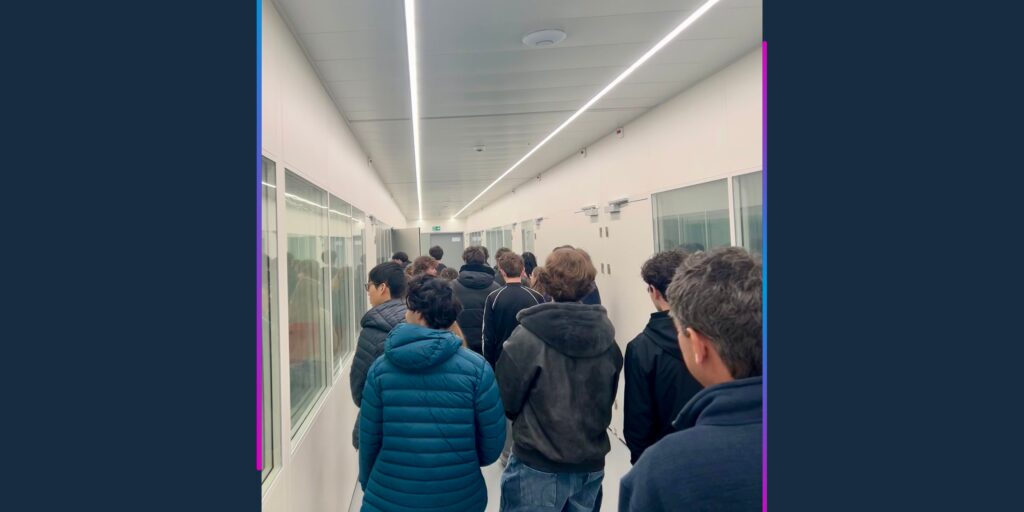
Around twenty students from the Collège de St-Maurice visited the technological site of BioArk Monthey yesterday,during a week dedicated to discovering companies and economic activities across Valais.
Within this broader exposure to regional industries, the visit to BioArk offered a focused insight into the Life Sciences sector and its innovation dynamics. The morning opened with a presentation by Massimo Nobile, Site Manager of BioArk Monthey, who introduced the Life Sciences innovation ecosystem in Valais through the activities of The Ark Foundation and its network of technological sites. The overview highlighted how research, entrepreneurship and industrial development are interconnected within the region.
The students then visited the BioArk Monthey technology site, gaining an understanding of the infrastructures that host Life Sciences activities across different stages of development, from emerging ventures to established industrial operations.
Discussions continued with representatives from three BioArk resident organizations, illustrating the diversity of profiles and activities present within the ecosystem:
- CEIDOS, presented by its CEO Sébastien Walpen, develops C-Netics, a technology enabling real-time, non-destructive monitoring of cell viability and cell density directly inside bioreactors. The exchange highlighted the entrepreneurial pathway behind the creation of the startup and the development of an advanced bioprocess monitoring solution.
- RegenLab, represented by Fabrice Vulliens, Production Director, is an international medical device company specialized in regenerative medicine. The visit focused on CellularMatrix®, a ready-to-use autologous blood-derived matrix for regenerative applications. Students observed batch validation steps carried out in cleanroom conditions and visited the laboratory infrastructure supporting regulated production.
- Cordsavings, introduced by Hélène Darragon, QA Manager, operates a biobank dedicated to the collection, processing and long-term storage of umbilical cord stem cells. The visit included the presentation of the collection kit and an overview of the operational workflow governing cell handling, traceability and quality assurance.
Beyond their respective activities, each speaker shared their professional background and career trajectory, offering perspectives on the range of scientific, technical and managerial roles that structure the Life Sciences sector.
By placing Life Sciences alongside other industrial and production-oriented activities encountered during the week, the visit contributed to a broader understanding of the diversity and specificity of innovation-driven sectors present in Valais.